News Center
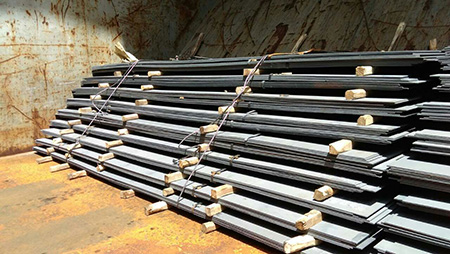
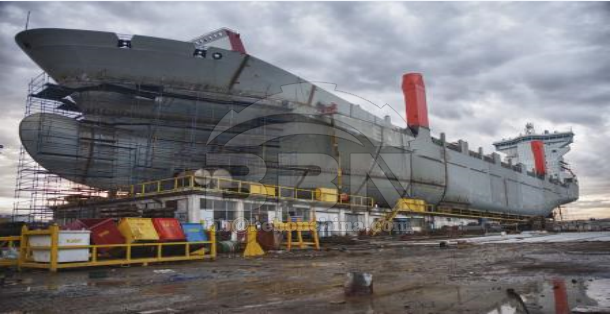
A36 steel is widely applied in cargo ships, ferries, and utility vessels where structural demands are moderate and cost efficiency plays a key role. In these vessel types, A36 is typically used for deck supports, internal framing, hatch coamings, bulkhead stiffeners, walkway structures, and auxiliary platforms. Its balanced mechanical properties make it suitable for components that do not experience extreme stress but still require stable long-term performance under cyclic loading and marine operating conditions.
In cargo vessel construction, A36 is often selected for secondary load-bearing structures that support cargo handling systems and deck equipment. These include crane bases, support frames for lifting gear, and reinforcing members around cargo holds. Its consistent strength allows engineers to maintain structural safety while optimizing material usage, especially in large vessels where weight and cost control are important design considerations. In ferries and utility ships, A36 is frequently used in passenger deck structures, internal corridors, machinery foundations, and service platforms, where ease of fabrication and assembly efficiency are critical.
One of the key advantages of A36 in shipyard production is its excellent workability. It can be easily cut, drilled, welded, and formed using standard shipbuilding processes, which significantly improves fabrication speed. Shipyards benefit from its predictable behavior during flame cutting and plasma cutting, as well as its stable response during multi-pass welding operations. This reduces rework rates and helps maintain consistent production schedules in large-scale vessel manufacturing.
From a structural standpoint, A36 provides sufficient strength and ductility for utility vessel applications. It performs well under static and moderately dynamic loads, making it suitable for vessels operating in coastal waters, inland waterways, and short-sea shipping routes. However, because it is not a specialized marine alloy steel, proper corrosion protection is essential. In practice, A36 components are usually treated with marine-grade primers, epoxy coatings, and protective paint systems to ensure durability in humid and saline environments.
Another important factor is its availability and standardization. A36 is globally accessible and widely recognized under ASTM standards, which simplifies procurement and quality inspection in international shipbuilding projects. This ensures uniformity across production batches and allows shipyards to maintain consistent material performance regardless of supplier origin.
A36 remains a practical and economical material choice for cargo and utility vessels. Its combination of ease of fabrication, reliable mechanical behavior, and cost efficiency makes it well-suited for large-scale ship construction where operational reliability and production efficiency are both essential.
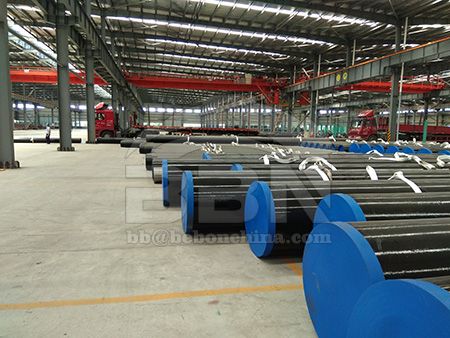
GB T 5312 Carbon and carbon-manganese steel seamless steel tubes and pipes are mainly for ship use, also known as shipbuilding steel pipes. Under GB T 5312, there are mainly 5 steel grades: grade 320, 360, 410, 460 and 490. Each grade covers three levels: I, II, III.
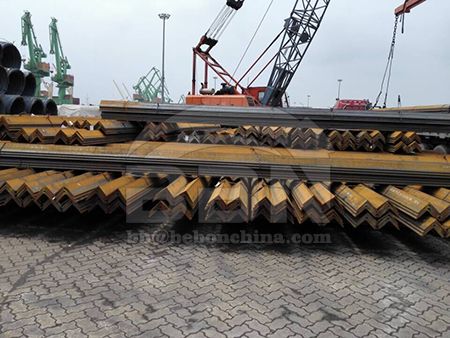
Angle steel, commonly known as angle iron, is a long strip of steel whose sides are perpendicular to each other. There are equal angle steels and unequal angle steels. The two sides of equal angle steel are equal in width. The unequal angle steel is also known as L shape profile steel.
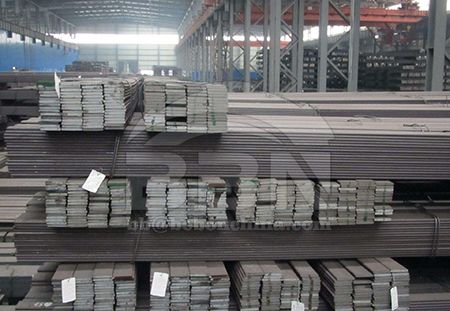
Flat bar steel can be produced according to the user's needs, with fixed thickness, width and length. It can reduce the cutting process for users, reduce the consumption of labor and materials, and also reduce the processing loss of raw materials.
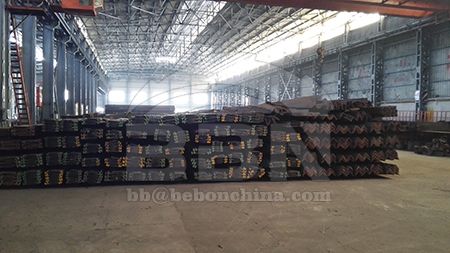
Bulb flat steel for shipbuilding
The bulb flat steel is a kind of medium section material which is mainly used in the field of shipbuilding and bridge building, and the shipbuilding bulb flat steel is an auxiliary medium section material for shipbuilding.
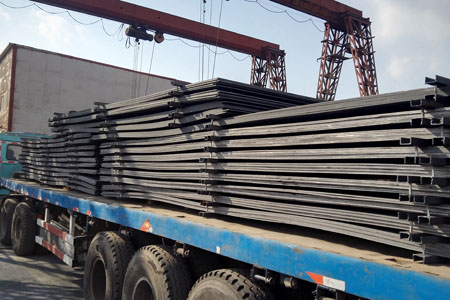
The steel for shipbuilding and oil platform---FH40, is the high tensile strength steel.The shipbuilding steel FH40 is the Hull structural steel.We can provide FH40 shipbuilding steel plate price.
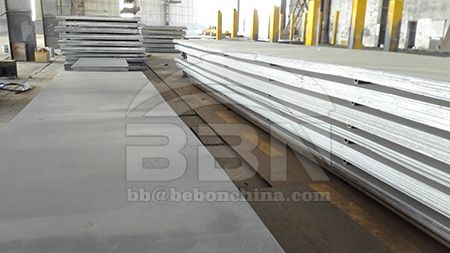
The steel for shipbuilding and oil platform---EH40, is the high tensile strength steel.The shipbuilding steel EH40 is the Hull structural steel.We can provide EH40 shipbuilding steel plate price.
If you are interested in our company or products, welcome to visit our company or local offices; you can also get contact with us through online consulting, demand table submission, e-mails and telephones. Our staff shall wholeheartedly provide product information, application knowledge and good service for you.


 BBN SHIP STEEL FACTORY