News Center
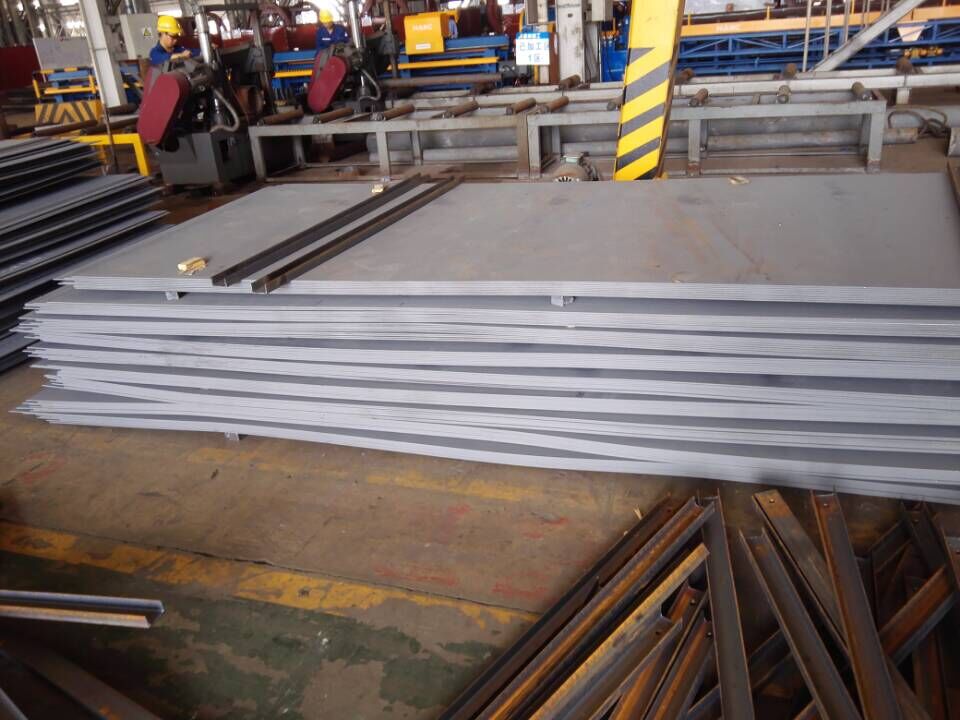
Grade A plates exhibit highly stable and predictable behavior throughout shipyard fabrication processes, making them suitable for efficient production of hull structures, deck systems, and internal ship components. Their uniform mechanical properties ensure consistent processing results, which is essential for modern prefabrication and modular ship construction.
In cutting operations, Grade A plates can be efficiently processed using flame cutting, plasma cutting, and laser cutting systems. Flame and plasma cutting are commonly used for thicker ship plates, providing efficient material separation and acceptable edge quality for large structural components. Laser cutting is often applied to thinner plates or precision parts, where higher dimensional accuracy and smoother finishing are required.
During forming processes, Grade A demonstrates good rolling and bending performance, allowing it to be shaped into curved hull sections and structural panels without significant cracking risk. Its moderate hardness reduces tool wear during fabrication, helping extend equipment life and reduce maintenance costs in shipyard operations. At the same time, its consistent mechanical properties ensure repeatable forming accuracy across large production batches.
Welding performance is another major advantage in shipbuilding applications. Grade A supports stable and reliable welding using standard shipyard methods, producing consistent joint strength across large structural assemblies. This ensures structural continuity in hull blocks, deck sections, and internal reinforcements, which is critical for prefabricated construction systems requiring high assembly precision.
Due to its predictable fabrication behavior, shipyards widely use Grade A for prefabricated structural panels and general ship components. These include hull plating sections, deck panels, bulkheads, and secondary support structures. Prefabrication in controlled workshop environments significantly improves construction efficiency, reduces on-site workload, and enhances overall assembly accuracy.
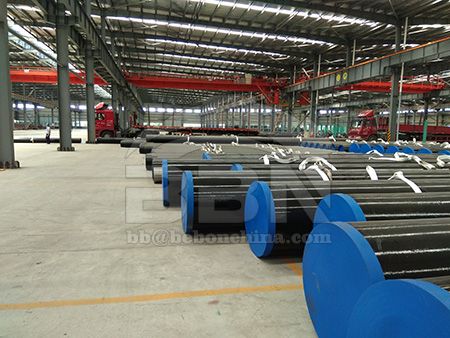
GB T 5312 Carbon and carbon-manganese steel seamless steel tubes and pipes are mainly for ship use, also known as shipbuilding steel pipes. Under GB T 5312, there are mainly 5 steel grades: grade 320, 360, 410, 460 and 490. Each grade covers three levels: I, II, III.
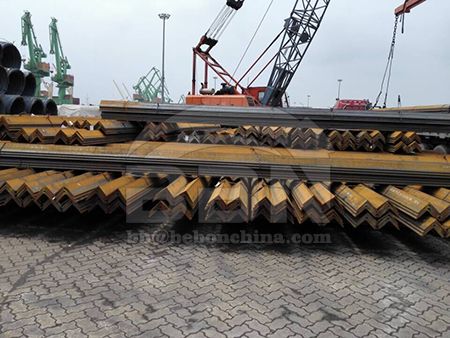
Angle steel, commonly known as angle iron, is a long strip of steel whose sides are perpendicular to each other. There are equal angle steels and unequal angle steels. The two sides of equal angle steel are equal in width. The unequal angle steel is also known as L shape profile steel.
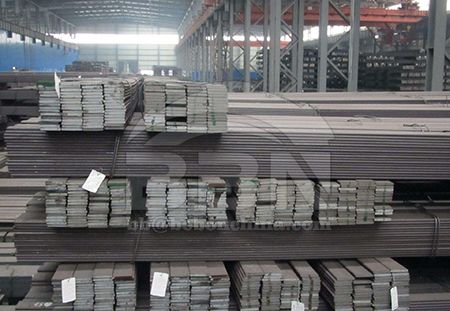
Flat bar steel can be produced according to the user's needs, with fixed thickness, width and length. It can reduce the cutting process for users, reduce the consumption of labor and materials, and also reduce the processing loss of raw materials.
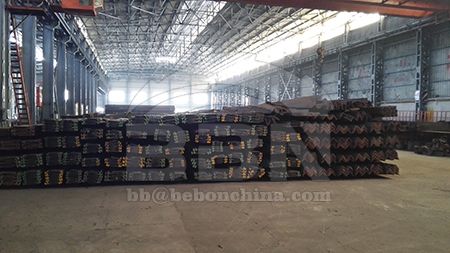
Bulb flat steel for shipbuilding
The bulb flat steel is a kind of medium section material which is mainly used in the field of shipbuilding and bridge building, and the shipbuilding bulb flat steel is an auxiliary medium section material for shipbuilding.
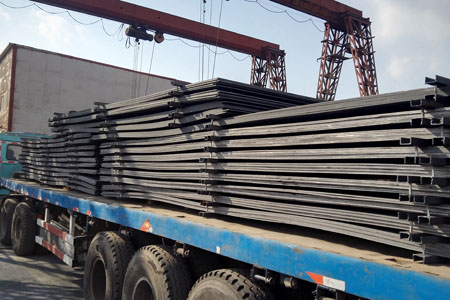
The steel for shipbuilding and oil platform---FH40, is the high tensile strength steel.The shipbuilding steel FH40 is the Hull structural steel.We can provide FH40 shipbuilding steel plate price.
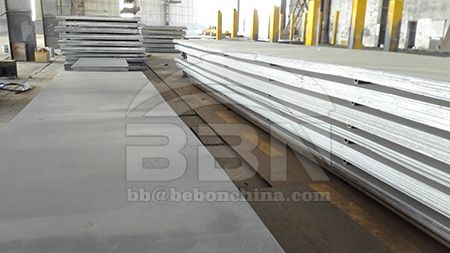
The steel for shipbuilding and oil platform---EH40, is the high tensile strength steel.The shipbuilding steel EH40 is the Hull structural steel.We can provide EH40 shipbuilding steel plate price.
If you are interested in our company or products, welcome to visit our company or local offices; you can also get contact with us through online consulting, demand table submission, e-mails and telephones. Our staff shall wholeheartedly provide product information, application knowledge and good service for you.


 BBN SHIP STEEL FACTORY